Showing posts with label article. Show all posts

Wednesday, January 8, 2014

MIKE TAYLOR SENSEI'S KAGAMI BIRAKI MESSAGE 2014


Rising Star Aikido held it's annual Kagami Biraki ceremony on January 7th 2014. The following message was read by Mike Taylor Sensei issuing a challenge to the Rising Star Aikido students.


I just want to take a few moments to talk about goals in Aikido. While it is nice and exciting to obtain higher rank, to receive new belts, and to accept new responsibilities, this should not be the focus of your Aikido training. I'm not saying that these things aren't important milestones, but we need to keep in mind that thy are just that. Milestones on a lifelong journey

O' Sensei once said that we should strengthen ourselves to defeat our weaknesses. This can be interpreted in different ways. He could have meant to become physically strong, but we must realize and understand that the physical body will weaken with time. A better interpretation would be to strengthen the spirit and be mentally fit. 

To do this, there are a few simple things we must realize:

 First, Aikido is not a competition. Do not wory yourself with someone else's progression or achievements. Be the best you can be and find satisfaction in that. 

Second, get outside of yourself. Keep an open mind to different ideas and new experiences. Never underestimate anyone. After nearly 25 years of experience I still learn something every time I step on the mat. Sometimes it's from a sempai, but most of the time it is from the students. The easiest way to get outside of yourself is to accept one of the hardest things to admit, you don't have all the answers and you're not always right. Accept advice graciously and ask for help. No one travels this path alone. Sometimes you have to give in to get your way. 

Finally, third. Give of yourself. This may be done on the mat while taking a throw from a classmate, or it may be done on the side of the road changing a flat tire for an elderly motorist. We are judged by our actions both inside and outside the dojo. Remember the meaning of the word uke, the one who is sacrificed. There is more than one way to take ukemi. Take time to make sacrifices to better someone else's experience. You have no idea how much it means. 

One of my favorite O' Sensei quotes is "tighten up the slack, toughen the body, and polish the spirit". This is my challenge to you as students of Aikido for the upcoming year. Leave your egos and expectations behind and try to make your slice of the world a better place. If you do this, you will be successful in all that comes your way. 

I wish you a safe, happy, and prosperous 2014. 

Wednesday, January 9, 2013

Mike Taylor Sensei's Kagami Biraki Message 2013


Rising Star Aikido held it's annual Kagami Biraki ceremony on January 8th, 2013. The following message was read by Mike Taylor Sensei. It was based off of a conversation that took place a couple of days before between Mike Taylor Sensei and Wally Taylor Sensei. 


During this Kagami Biraki ceremony and celebration, observe not just everything that is done, but how it's done. Pay attention to details. Study the symbolism of the displays and the ceremonies that are conducted. Listen to what is said and absorb the meaning. Notice what is not said and understand the significance. It doesn't matter if this is your first  Kagami Biraki or if you've experienced this ceremony more times than you can remember, there will be something to learn.

I have often heard my instructors mention a quote that O Sensei would use. The exact quote has never been used to my knowledge, but the basic message is “If you're going to do Aikido, do Aikido. If you're going to dance, go dance”. What they are trying to convey is that Aikido is a martial art. In being a martial art, we must give it honest and sincere attention because the capability to injure is in our hands. Many people mistakenly call any martial art “Budo”. Budo is usually translated to “the martial way” or “The way of the warrior”. This is not entirely correct because there are many ways to interpret the word. If you break down the word Budo into symbols Bu uses the characters "tome" (stop) and "hoko" (spear/halbred), easily read as Stop the Weapon or Stop the fight. Do means “the way or the path”. Budo literally means “A way to stop the fight”.

O Sensei took this a step further when he developed Aikido. He said “Budo is not a means of felling the opponent by force or by lethal weapons. Neither is it intended to lead the world to destruction by arms and other illegitimate means. True Budo calls for bringing the inner energy of the universe in order, protecting the peace of the world , as well as preserving, everything in nature in its right form.
.Aikido does not rely on weapons or brute force to succeed; instead we put ourselves in tune with the universe, maintain peace in our own realms, nurture life, and prevent death and destruction. The true meaning of the term "samurai"is one who serves and adheres to the power of love.”

It is often said that O Sensei intended for Aikido to be a living art. Many times people interpret this to mean that Aikido is ever changing and is meant to be reinvented. This is not entirely the case. In creating Aikido, O Sensei combined some of the most vicious fighting arts available with morals, respect, and compassion to create a living art, an art that you can live your life by.

As we welcome this new year of training, use this ceremony to rededicate yourself to this art. Use it as a time to reflect on how you can take those steps to gain the confidence and courage to find your inner peace. Take the time to think of those who came before you and to thank those who are with you here today. They are the ones who will be offering you their bodies to assist you in your training, only asking that they be returned in the same condition that they were given. No one makes this journey on their own.

As O Sensei said “Aikido is not a technique to fight with or defeat an enemy. It is the way to reconcile the world and make human beings one family.”

Here's hoping for a safe and happy new year with our Rising Star Aikido family. May it continue to grow and prosper in 2013.

Saturday, March 21, 2009

Aikido in Bloom


At many dojos, seminars, and events we notice a flower arrangement on or near the shomen. Flowers add an astetic beauty and bring about feelings of peace, but I feel that there is a deeper meaning to the flowers, which I will discuss in this month's installment.

Flowers, and all plant life, begin from a simple seed. If left alone, this seed may or may not develop. With care and nuturing it will grow and flourish into something beautiful. Much like a student walking through the door, if left alone they may or may not grasp Aikido. If they are nutured by their sensei and sempai, only then will their art begin to grow and bloom.

A flower does not just sprout into the beautiful plant that we see and recognize as a flower. It is very basic, sometimes very unattractive when it is in the budding stage. It's only after this nuturing and maturing stage that it will bloom to reveal it's inner beauty. Aikido is much the same, in the beginning it's awkward, very basic, and sometimes down right unattractive. The flower doesn't give up and neither should the student. Continue to develop your art, practice hard, and with enough training your art will bloom.

I am often reminded of a quote I saw some time ago. I'm not sure who came up with this, but I feel it fits well into this discussion. The quote says " I will not complain that my rose bush has thorns, but rather marvel in the fact that my thorn bush grew a rose." The literal interpertation is easy enough to understand. If you spend your life worrying about the thorns, you won't have time to enjoy the roses. The Aikido twist on this is that if someone spends all their time focusing on what's wrong or bad with their techniques, they will never enjoy what's beautiful about their Aikido. Try to spend your time on the mat looking for the good, or the roses, in your art. Don't worry about the thorns. Just as with the flower, there will always be thorns in life and with a little care they can be pruned and trimmed away.

Each and every person that walks into the dojo is a thorn bush that is seeking to grow a rose. It is sempai and sensei's duty to nurture that thorn bush and help to point out the roses that begin to grow. As time goes on, the thorns can be cut away to reveal the beautiful flower that is budding. The next time you practice, try to seek out the roses and enjoy the beauty instead of pointing out the thorns. If we do this, we can all grow together and enjoy the garden that is Aikido in bloom.

- Sensei Mike

Friday, February 6, 2009

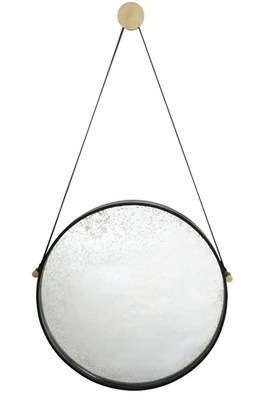
Symbolism pt. 1: Look at the Mirror

It has been way too long since I've posted anything here, so to get back into the swing of things, I've decided to start a series of posts explaining how we use basic objects and actions to explain Aikido principals and life lessons in the dojo. Anyone who has trained at Rising Star knows that Sensei Wally and myself try to use some form of symbolism in our teaching. In this first post we will look at the mirror.

Many times, in most of the dojos you visit, practice begins with the uncovering of the mirror. Traditions like this aren't often explained, but are usually accepted by new comers as "the way things are". With time, and a bit of curiosity, students learn of some of the symbolism that the mirror represents. Here is a bit of what I have understood through my years of training.

A mirror does not lie, always showing a true image and reflection of what is before it. It doesn't have the ability to skew the facts or make judgements, but rather shows things only as they outwardly appear. It is said that you only get out of the mirror exactly what you put into it. This relates to Aikido in that you only get out of practice exactly what you put into it. If you practice hard, honestly, and to the best of your ability, your techniques will be honest and the best they can be. If your training is sloppy and half-hearted, your techniques will reflect that and your Aikido will fail you when it is needed.

The life lesson here is that you get out of life what you put into it. If you live honestly and do things to the best of your ability, you should receive the same in return. Even when bad situations arise, as they always do, they are easier to deal with and remain situations instead of devastation. With a healthy mind and a clear conscience anything is possible.

One last note on the mirror. As was pointed out to me by a high ranking sensei once...

I was asked to explain the reason for the mirror at the front of the dojo, which I gave an explanation similar to what is above. He pondered it for a moment and asked if I truly believed in what I had just said. I replied that I did, wondering where this line of questioning was going. He then asked why I allowed my mirror to lie. The puzzled look on my face and my inability to respond prompted him to explain that my mirror did not give a true reflection, and he pointed out the fingerprints and smudges on the surface. A dirty mirror will give off a tainted image, so take a moment out of your busy life to clean your mirror, renew your spirit, and enjoy your reflection.

Wednesday, September 26, 2007

What makes Aikido successful?

During our recent Fellowship Seminar, it was mentioned by Kubo Shihan that his teachings and message during said seminar were based on a paper that I had written for my yondan test. It was also suggested that this paper be made available to folks who would care to read it. Sorry for the length, but I tend to ramble a bit when writing. I hope this paper helps to explain my stance on Aikido. Thanks for taking the time to read it. -- Sensei Mike


While considering what it takes to be a good Aikidokia, I started thinking of the points that I feel make good Aikido. There are many differing ideas as to what makes one successful or unsuccessful in martial arts, Aikido in particular, and I thought it would be interesting to compare and contrast some of these ideas. I wanted to focus on the pros and cons of the following points as they relate to the practice of Aikido: technical precision, strength, ki development, and atemi.

Starting at a problem that many encounter in the beginning of their Aikido training, strength is a major issue with many newcomers. The idea that “I’m bigger than you so I should be able to do this better” isn’t always the correct one. The more muscular students will find themselves relying on their strength and will struggle with their technique because of this. Not to say that sometimes a size or strength advantage is always a bad thing, but it’s not something that should be depended on. Sometimes we will hear an instructor tell us to be strong, or take a stronger stance. This doesn’t mean use your muscle, but might mean keep your balance, extend your energy, or focus. To say that physical strength has no place in Aikido is not one hundred percent true, the key here is to know your limits, and know what to use, how to use it, and when to use it. Aikido has often been called “The Old Man’s Art” and is at times advertised specifically to women and children as an effective method of self-defense. The average woman or child is unable to rely on any strength advantage so they have to take another path to be effective in their art. This “edge” that Aikido practitioners should seek out is technique, which brings us to our next point.

After the idea of using strength is toned down, students begin to learn that proper technique is more effective than powerhouse tactics. To me, proper technique doesn’t require the student to step with the left foot at a certain angle or a certain sized step, but rather requires the student to step with whatever foot, however deep, and at whatever angle it takes to disrupt his attacker’s balance. Each person’s physical make up is different and the “textbook” technique that you learned may not work on everyone. Knowing the basic moves and how they work, you can modify them to accommodate your situation. After the practitioner learns these basic techniques, the next logical step in many people’s Aikido career is to make those moves more pleasing to the eye. The desire to be flashy and impressive has proven to be the undoing of many a good nage and the results of these actions have been disastrous. There have been many injuries, some ending uke’s Aikido training days for extended periods of time or permanently, caused by showboating for fellow students or an audience. With solid, basic technical knowledge and humble practice these unnecessary risks can be avoided. Only after the foundation is set can you start to expand your Aikido practice.

One thing that many people feel is extremely important to the success of their training is the use of atemi. Atemi are strikes used in conjunction with Aikido techniques to neutralize an attacker by attacking the weak centers of the body with focused force; to control the opponent by using flowing strikes to create a desired reaction; and to distract an opponent with momentary pain while a technique is executed. In my opinion, the best use for atemi is the latter, to distract the attacker from what is actually happening to them or, as Sensei puts it, “take their mind”. The strike does not need to be a powerful or crippling blow, but rather a small piece of the big picture for your uke to examine for a moment. That being said, the atemi should not disrupt your overall technique. Aikido is generally meant to be a flowing art, and your strikes within that art should fit with that flow. Here again, a basic knowledge of strikes, their placement, and their results are helpful in deciding where and when to place atemi. The strikes should be placed where they don’t interrupt your movement and the reaction to these strikes (where uke is going to end up after the strike) should be considered. In most cases, if you connect with a good solid atemi, you won’t need to complete your Aikido technique, as the threat will be neutralized. If the strike merely distracts your attacker, then the opening for your art is provided.

One of the hardest concepts for beginners to grasp is that of ki. Ki is the life energy that all things posses. The degree to which one develops this energy and learns to use it may have a factor on one’s Aikido. As with all my other points, a basic foundation of knowledge is needed before diving off the deep end into ki development. I have seen many prodigies and self taught gurus in this area that didn’t understand the basics ideas behind the flashy show they were attempting to put on. There is a list of common sense basics to ki development that I have learned. These points are breathe, relax, keep weight underside, and extend. While those may not sound like they’re basic common sense ideas, when you look into each one individually, they are.

The first, breathe, is self-explanatory. For any living thing to continue to live, it must breathe. For muscles to work properly they need oxygen for fuel. To prove this one to yourself, try lifting an object that has some weight to it, but not too heavy for you while holding your breath. Then try the same object again while inhaling or exhaling. It should be considerably easier when you breathe.
Relaxing is key to any physical movement. When the body is tense, it becomes much more difficult to move in a smooth, flowing manner. We don’t ask you to relax to the point of limpness, but rather to a supple but giving state. Consider a stalk of bamboo when thinking about this level of relaxation. Bamboo is a strong, supple material, but flexes and gives when need be to avoid being broken. If your body is too rigid, it too may be in danger of being broken. Another form of relaxing to think about is mentally. In certain situations where you may use your Aikido training, high stress levels may accompany the threat. If you go into a mental “freak out” your training goes right out the window. Keeping a cool head during conflicts will keep you in charge of that situation, and may help you avoid the situation to begin with.

Many people don’t understand “keep weight underside” and get confused when discussing it. It doesn’t mean drop into a low stance and become rigid. It simply means move from your center. I explain it to students as following your obi knot. This area is roughly your center of gravity and controlling this point controls balance. If you lead movements with the upper body, you will be easily toppled off balance due to the distribution of weight in the human form. If your weight resides in it’s natural center, and you use this center to move, you will have a strong stance and good balance.

The last of these principals is to extend. Extension is simply blending the previous three points into one and adding some movement. If one breathes, relaxes to a supple but giving state, and keeps good balance then executes their techniques, they almost have no choice but to extend. There is a mental aspect to extending as well, which has to do with a person’s ki force. If you were to imagine a fire hose, firm with water pressure and spraying water out, it maintains it’s supple but giving state, while projecting the water out of the end. Use this image in your mind with the source of the water being your obi knot and the end of the hose being your arms, your hands, your feet, your head, or whatever part of your body you are using at the time. A side note to ki development that I always like to offer is that ki is not magic. It is simply a natural occurrence that takes a little practice to harness. With proper technique, proper relaxing, and strong stance, ki is a nice addition to your Aikido.

Well with all that said and done, have I decided what I feel makes a person’s Aikido successful? I feel that everything I have mentioned has a factor in making a person’s training a success. Depending on what that student walked through the dojo door for, they are the one that has to determine weather their Aikido career is taking the correct path for them. Some enter the art to learn self-defense, some to take up a physical activity, some to learn something new that none of their friends know, and others for the fellowship that a dojo atmosphere provides.
In my honest opinion, what makes someone’s Aikido a success is it’s effectiveness for that person. I don’t focus on precise technical points, but rather on effective, economical movement and end result. What is more effective, a basic kotegaishi that immobilizes an attacker and ends a threat or a flashy, high flying kotegaishi that might draw applause or oohs and aaahs from a gallery or might upset the balance of both uke and nage taking the threat to a new level. I know which one I’d choose if I had to, and that’s what makes my Aikido a success in my eyes.